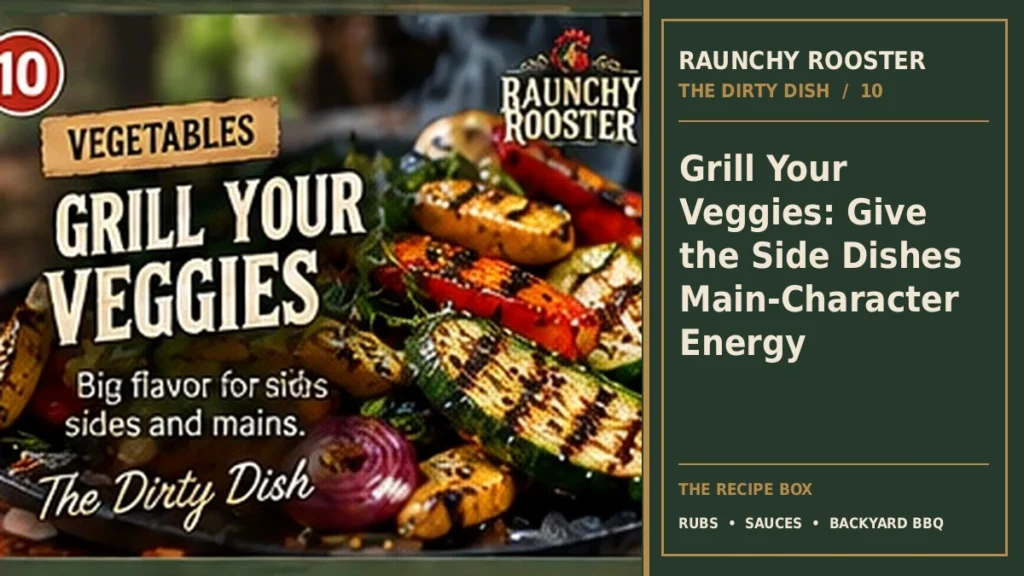
A plate of vegetables shouldn’t have to apologize for sharing space with ribs. Grilling can turn zucchini, mushrooms, peppers, potatoes, onions, and corn into the most talked-about part of dinner—if you give them their own plan instead of dropping everything on the grates at once.
Sort vegetables by cooking time
Dense vegetables like potatoes need a head start. Cut them into manageable pieces and par-cook when appropriate, then finish over the grill for color. Zucchini, peppers, onions, and mushrooms move faster; asparagus can go from crisp-tender to soft quickly.
The easiest mistake is cutting everything to the same size and expecting it all to cook in the same time. Group similar vegetables, and keep a cooler cooking zone available.
Use a light hand with oil and seasoning
Dry the cut surfaces, toss lightly with oil where useful, and season. Side Hustle brings an herbaceous, dill-and-garlic direction to potatoes and vegetable skewers. Italian Job is an easy match for zucchini, tomatoes in a grill-safe pan, or grilled mushrooms. Gold Rush adds a mustardy edge to vegetables that can handle bolder seasoning.
Don’t saturate vegetables with oil. Excess oil drips into the heat and can produce flare-ups. A clean basket is excellent for small pieces that would otherwise escape through the grates.
The vegetables I would put on the menu
Zucchini planks: Slice lengthwise, season, and move to a hot grate until grill marks develop and the interior is tender. Pepper and onion baskets: Toss in a little oil, add your favorite blend, and cook until the edges soften and brown. Corn: Grill using a method suitable for your grill and preferred husk treatment, then finish with butter and a controlled dusting of rub. Mushrooms: Choose whole small mushrooms or large slices and keep their moisture in mind; don’t drown them in sauce.
Build a vegetarian-friendly backyard plate
Offer beans, a grain salad, a substantial grilled vegetable mixture, and separate clean utensils. If you serve vegetarian guests, check seasoning ingredient labels and prevent contact with animal products and cooking surfaces that might matter to them.
Don’t make sides an afterthought
Vegetables can finish at different times, so stage them in bowls and add quick-cooking items near the end. Taste before serving; a small squeeze of acid or a handful of herbs often makes more difference than another layer of seasoning.
Richard may be a rooster, but that doesn’t mean he understands vegetables. Fortunately, you do.